
Case Study

Construction of Commercial Buildings at Barton Business Park

Turnkey solution utilising in-house team and specialist subcontractors

Client: Barton Business Park, Canterbury, Kent

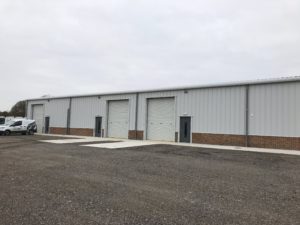
Barton Business Park Exterior Completed

Overview

FGS Pilcher acted as Principal Contractor and Project Manager for the phased construction of five commercial buildings at Barton Business Park on the outskirts of Canterbury. The four-year brownfield development created 23 modern business units designed for flexible commercial occupancy.

The project was delivered as a turnkey solution, coordinating specialist subcontractors for structural steelwork, bricklaying, and electrical installations, whilst maintaining full programme and site management responsibilities throughout.

A key aspect of the development was the phased occupation of completed units during ongoing construction works. As each building reached completion, tenants moved into occupation, requiring construction activities to be carefully managed around live business operations. The final phase included demolition of an existing retained building to facilitate completion of Building No. 5.

Scope of Works 

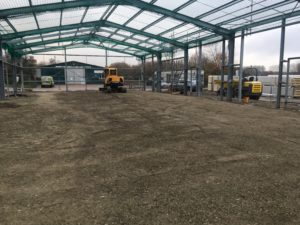
  • Ground stabilisation and brownfield site preparation
  • Construction of five steel-framed commercial buildings
  • Structural insulated floating floor systems
  • Reinforced concrete floor slabs and foundations
  • Cavity dwarf wall construction
  • Installation of composite wall and roof panels
  • Mezzanine floor installation within units
  • Fire separation walls between units
  • Drainage, utilities, and external works
  • Coordination and management of specialist subcontractors
  • Full compliance and sign-off under Building Control

Key Constraints & Risks

Live Occupied Environment
Completed units became operational whilst later phases remained under construction, requiring strict segregation and controlled access arrangements.

Brownfield Site Constraints
Ground conditions and existing infrastructure required stabilisation works and phased demolition activities.

Phased Construction Programme
The project was delivered over four years with overlapping construction and tenant occupation periods.

Existing Building Retention & Demolition
An existing structure remained operational during earlier phases before being demolished during the final phase to enable completion of Building No. 5.

Delivery Approach

  • Phased construction programme to maintain tenant access and occupation
  • Controlled working zones separating live business units from construction activity
  • Continuous liaison with landlord representatives and tenants
  • Coordinated subcontractor management across multiple trades
  • Sequenced demolition and enabling works to support final build completion
  • Progressive handover of completed units throughout the programme

Challenges & Lessons Learned

Challenge 1: Working Around Occupied Commercial Units
Issue: As completed buildings became occupied, ongoing construction needed to be carried out safely alongside operational businesses.
Response:
• Segregated access routes for tenants and contractors
• Controlled deliveries and traffic management
• Flexible sequencing around tenant operations
Lesson: Early coordination and continuous communication with tenants is critical on
phased commercial developments.

Challenge 2: Brownfield Site Development
Issue: Existing site conditions required stabilisation works and careful management of
existing infrastructure.
Response:
• Ground stabilisation and preparation works
• Controlled demolition sequencing
• Ongoing Building Control coordination
Lesson: Early enabling works and flexible programming reduce risk on constrained brownfield developments.

Challenge 3: Multi-Phase Project Coordination
Issue: The four-year programme required management of multiple subcontractors and
overlapping project phases.
Response:
• Structured programme management
• Progressive handovers between phases
• Coordination of steelwork, brickwork, and electrical installations
Lesson: Clear project sequencing and proactive subcontractor coordination are essential to maintaining programme continuity.

Outcome

The completed Barton Business Park development delivered 23 high-quality commercial business units through a carefully managed phased construction programme. The project successfully balanced ongoing tenant occupation with continued construction activity, creating a modern and flexible commercial environment for business growth in Canterbury.